 UK
UK EU
EU AU
AU UAE
UAE
Blog
Coffee Packaging: A Beginner’s Guide
// Guide · Coffee Packaging
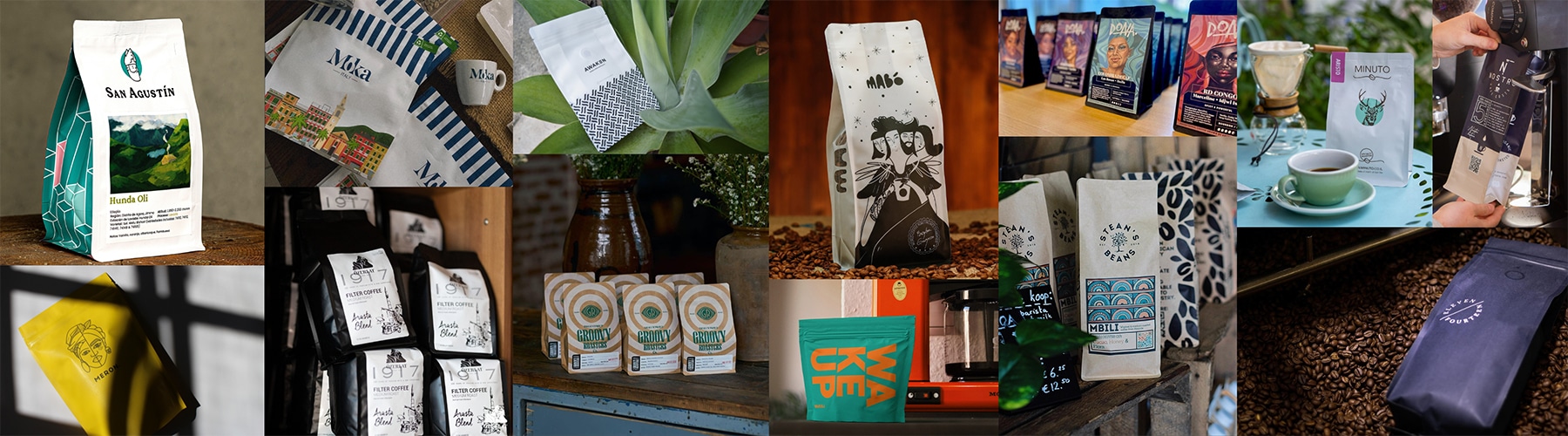
Get the packaging right and your coffee reaches the cup tasting exactly as the roaster intended. Get it wrong and even the best beans arrive flat, stale or damaged. Coffee packaging is the often-overlooked link between roastery and customer — and one of the most important decisions you’ll make.
This beginner’s guide covers how packaging protects freshness, the main bag formats and sizes, whether you need a one-way valve, recyclable vs compostable materials, and how to choose between stock and custom print.
// Why It Matters
Why coffee packaging matters
Roasted coffee is surprisingly fragile. Four things degrade it — oxygen, light, moisture and time — and good packaging is your defence against all of them.
- Oxygen is the enemy. Oxidation makes coffee taste stale. A high-barrier bag keeps oxygen out, preserving aroma for months rather than days.
- Freshly roasted coffee releases CO2. For days after roasting, beans degas carbon dioxide — which is exactly why the one-way valve was invented.
- Light and moisture accelerate staling. Opaque, well-sealed films protect against both.
- Logistics & shelf appeal. The bag has to survive transport — and it’s the first thing a customer sees.
In short: the right bag protects the product, survives the journey, and sells the brand.
// Formats
The main coffee bag formats
| Format | Best for | Shelf presence |
|---|---|---|
| Box bottom bags | Premium retail & subscriptions | High — flat print panel |
| Side gusset bags | The classic look; bulk & wholesale | Medium — traditional |
| Stand up pouches | Retail & online; resealable | High — stands unsupported |
| Flat pouches | Samples & single servings | Slim, postage-friendly |
| Drip coffee bags | Single-serve pour-over | Specialist format |
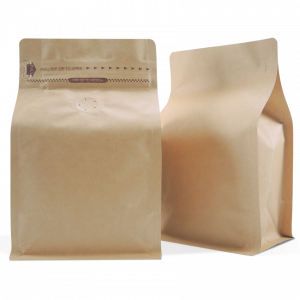
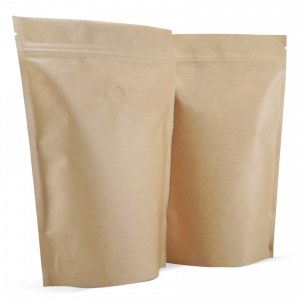
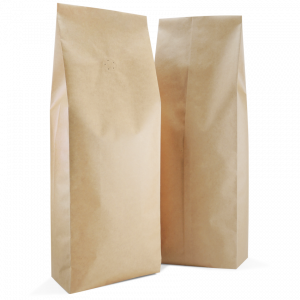
Box bottom bags stand tall with a large front panel — the premium retail standard. Side gusset is the traditional silhouette for larger volumes, often finished with a tin tie. Stand up pouches are the most versatile — they stand alone and reseal with a zip. Flat pouches suit samples, and drip bags serve the single-serve market. Browse the full coffee bag range.
// Sizing
Choosing the right size
Coffee bags are sized by the weight of coffee they hold, not the volume of the bag:
- 70g–100g — samples, tasters and subscription inserts.
- 250g — the most popular retail size across Europe.
- 500g — retail and smaller wholesale.
- 1kg — wholesale, hospitality and value retail.
Whole beans take up more room than ground coffee, so if you’re between two sizes, size up.
// The Valve
The one-way degassing valve: do you need one?
The one-way valve is the single most important feature in coffee packaging — and the most misunderstood. Here’s the logic.

- Freshly roasted coffee releases gas. Sealed with nowhere to go, CO2 inflates — and can burst — the pack.
- Oxygen must stay out. A one-way valve lets CO2 escape while keeping oxygen out, which would otherwise stale the coffee.
- It protects flavour. Letting coffee degas inside a sealed, valved bag preserves aroma right up until the customer opens it.
Use a valve for whole bean or ground coffee bagged soon after roasting. Skip it for fully degassed coffee, instant coffee, drip bags or non-coffee products. More detail in our guide to coffee bag valves.
// Materials & Sustainability
Kraft, recyclable, compostable or foil?
Every format is available in a choice of films. The right one depends on how long your coffee needs to stay fresh and the sustainability story you want to tell.
| Material | Finish | End of life | Barrier |
|---|---|---|---|
| Kraft film | Natural, black & white kraft | Not recyclable | High |
| Recyclable PE | Matte | Kerbside recyclable | Good |
| Compostable (NKME/PLA) | Kraft or matte | Home & industrial compost | Good |
| High-barrier foil | Matte or gloss | Not recyclable | Highest |
- Barrier vs recyclability is a trade-off. Kraft and foil laminates give the longest shelf life but aren’t recyclable; mono-material recyclable and compostable films are kinder at end of life with a slightly shorter shelf life.
- We launched a mono-material recyclable coffee bag globally in 2019, and introduced compostable coffee bags back in 2014.
- Recyclable, compostable and PCR options can also support your readiness for the EU Packaging & Packaging Waste Regulation (PPWR).
See every film structure in our materials guide, or read how to recycle coffee packaging.
// Stock vs Custom
Stock vs custom-printed coffee bags
There are two ways to buy, and the right one depends on where your brand is.
- Stock bags ship from our Netherlands warehouse with next-day dispatch (order before noon), from a single carton — delivery typically 2–5 working days across the EU — perfect for launching, testing the market or topping up. Label them yourself or add a tin tie and sticker.
- Custom-printed bags carry your full-colour artwork, printed at source. Minimum 2,000 units, around 11–12 weeks lead time — best for established and growing brands.
Many roasters start on stock and move to custom as they scale. When you’re ready, get a custom quote — we provide free dieline templates and a print-readiness check.
// How to Choose
A quick decision framework
Work through five questions in order and you’ll land on the right bag:
- Format — box bottom, side gusset, stand up, flat or drip?
- Size — 250g, 500g, 1kg or sample?
- Material — high-barrier, recyclable, compostable or foil?
- Valve — needed for freshly roasted coffee; skip for degassed or non-coffee products.
- Stock or custom — buy stock now, or invest in custom print as you grow?
Still not sure? Order a free sample pack and decide with the bags in your hands.
// FAQ
Frequently asked questions
What is the best bag for packaging coffee?
For whole beans, a box bottom or side gusset bag with a one-way valve protects freshness and stands well on shelf. Stand up pouches suit retail and ground coffee. For most freshly roasted coffee, a valved 250g–500g bag is the popular starting point.
Do coffee bags need a one-way valve?
Freshly roasted coffee releases CO2, so a valve lets gas escape without letting oxygen in. We recommend a valve for beans packed soon after roasting; fully degassed coffee, instant coffee and drip bags often don’t need one.
Are coffee bags recyclable or compostable?
Both exist. We stock mono-material recyclable bags, home and industrial compostable bags, paper-stream recyclable packaging, and PCR options. Traditional high-barrier kraft and foil laminates give the longest shelf life but aren’t recyclable.
What size coffee bag do I need?
Bags are sized by the weight of coffee they hold: 70–100g for samples, 250g the most popular retail size, 500g for retail and small wholesale, and 1kg for wholesale and hospitality. Whole beans take more room than ground, so size up if unsure.
Can I order coffee bags from a single carton?
Yes — our stock coffee bags are sold by the carton and dispatched next day (order before noon) from our Netherlands warehouse, so you can start with a single carton. Custom-printed bags start at 2,000 units with an 11–12 week lead time.
Ready to choose your coffee packaging?
Browse coffee bags in stock for next-day EU dispatch, order a free sample pack, or get a custom quote when you’re ready to brand your bags.
Shop coffee bags Free samples Get a quote